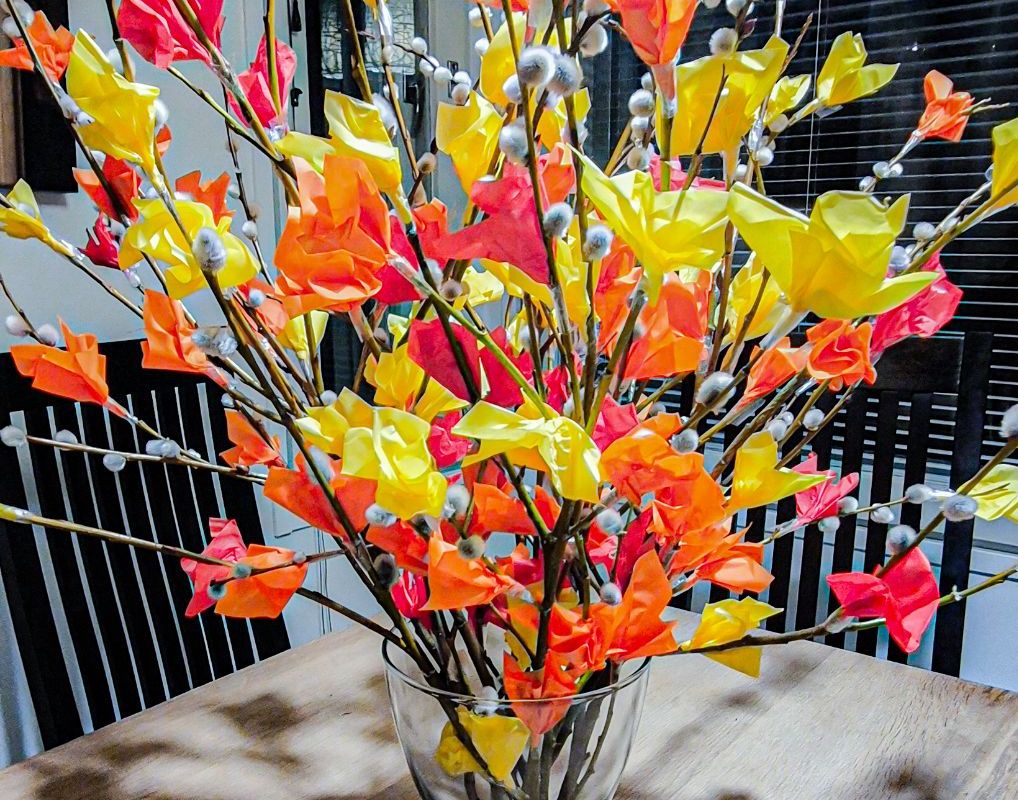
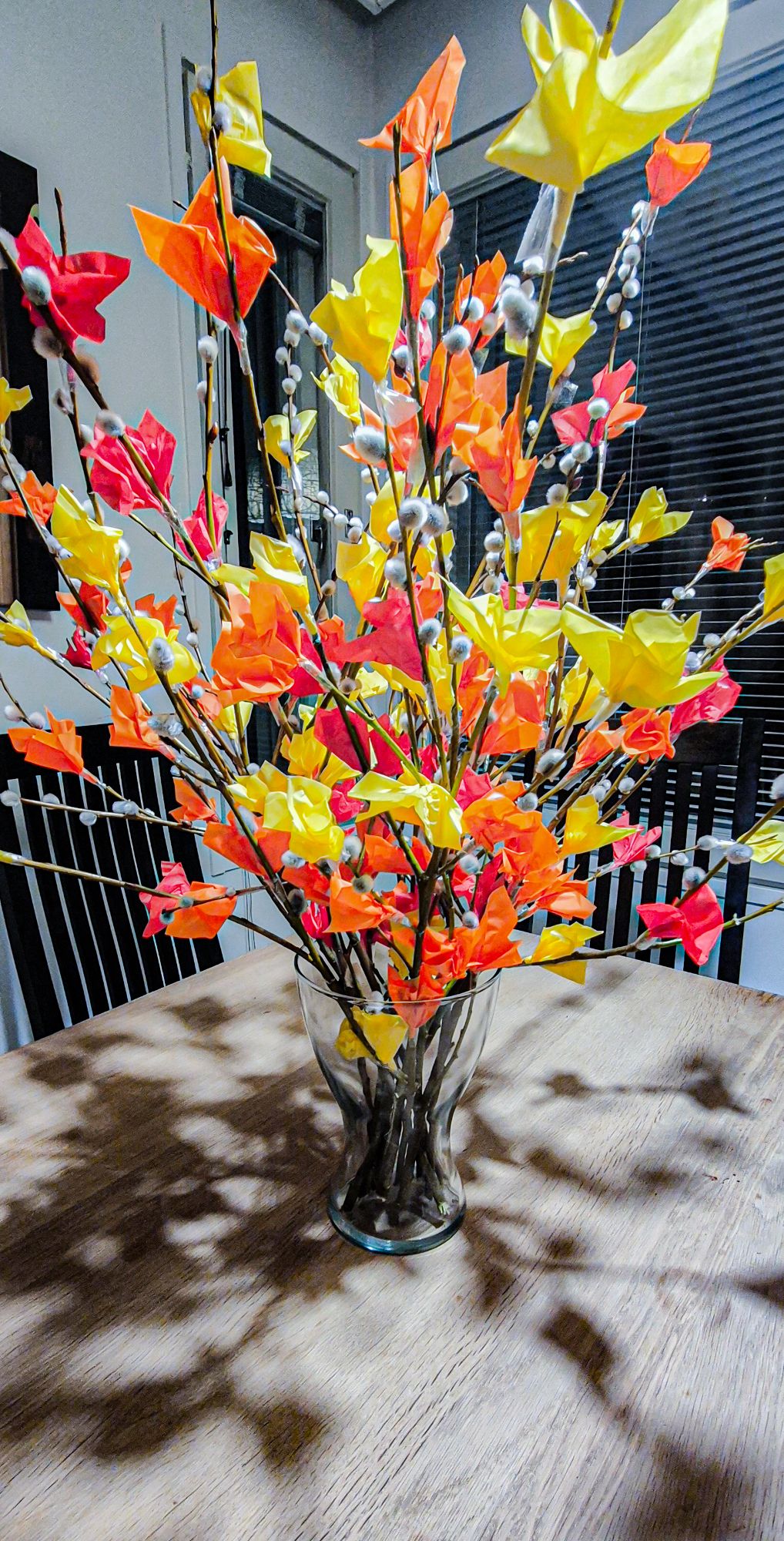
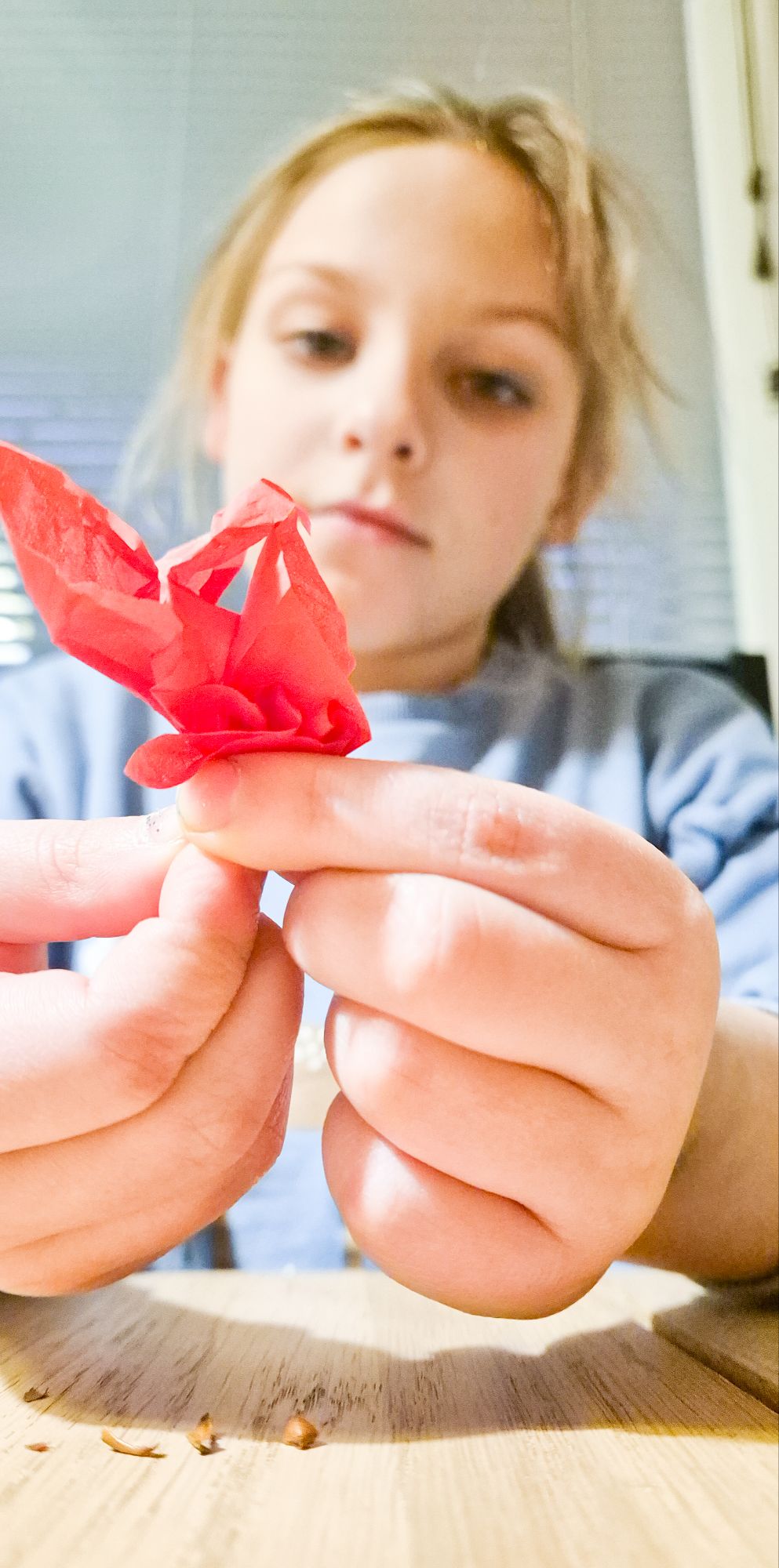
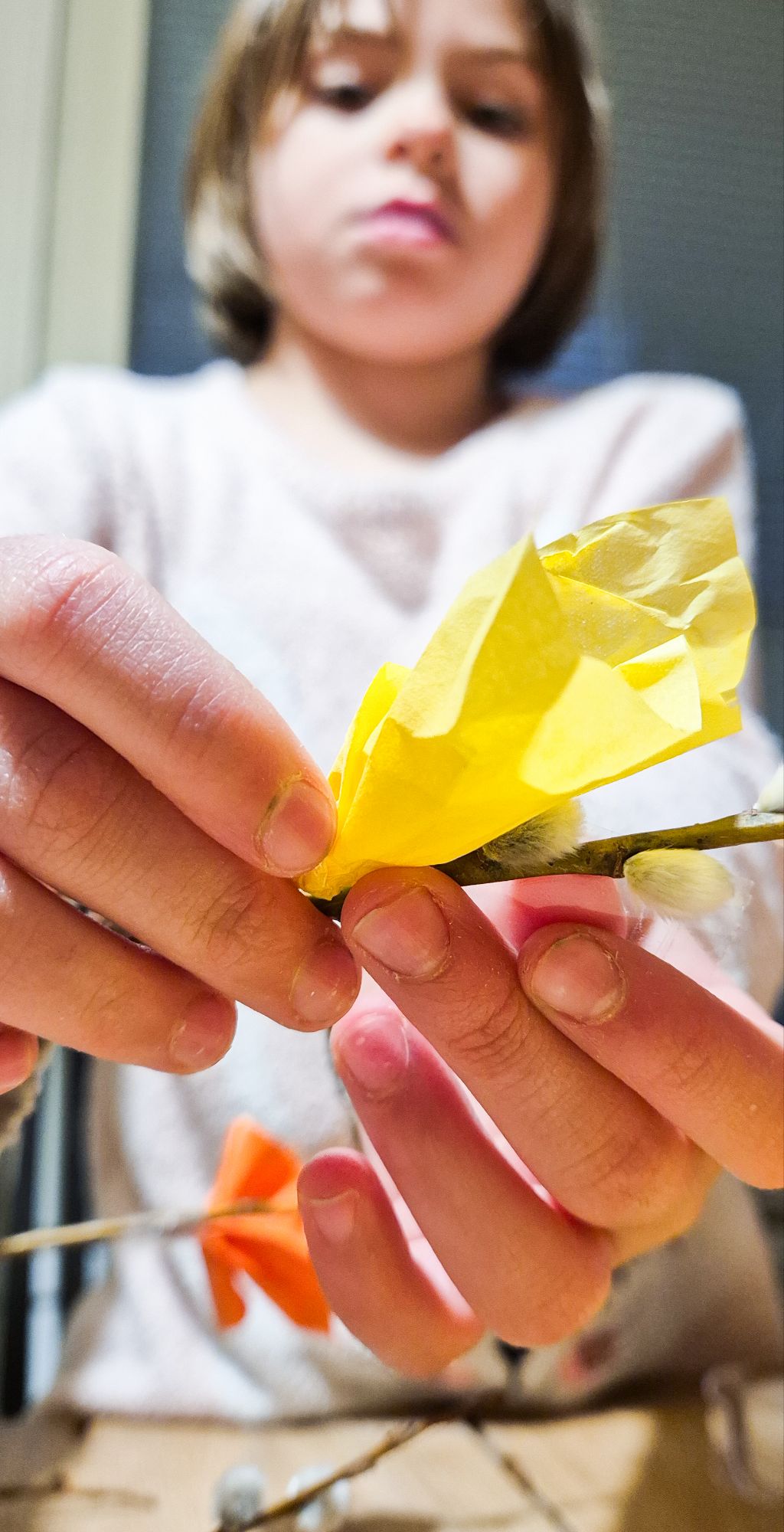
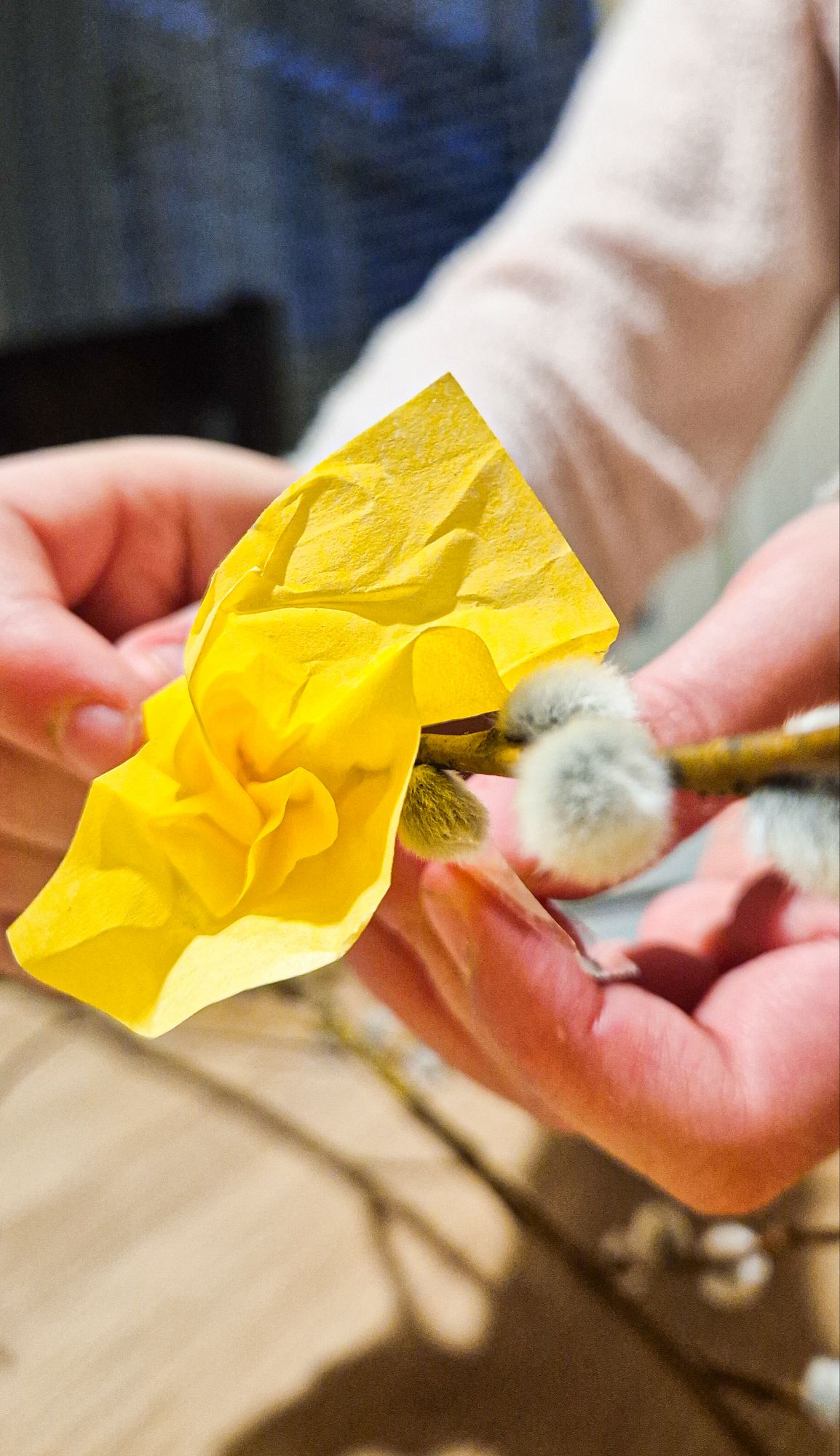
The girls and I decorated the willow branches for Palm Sunday. The combination of bright colors and cheerful catkins make me happy – especially as we had fun decorating them together.
Projects like this can be hard to start after a full day at work, but once you get going (typically bacause you have to, like now, with no other opportunity before Sunday) they are well worth it!
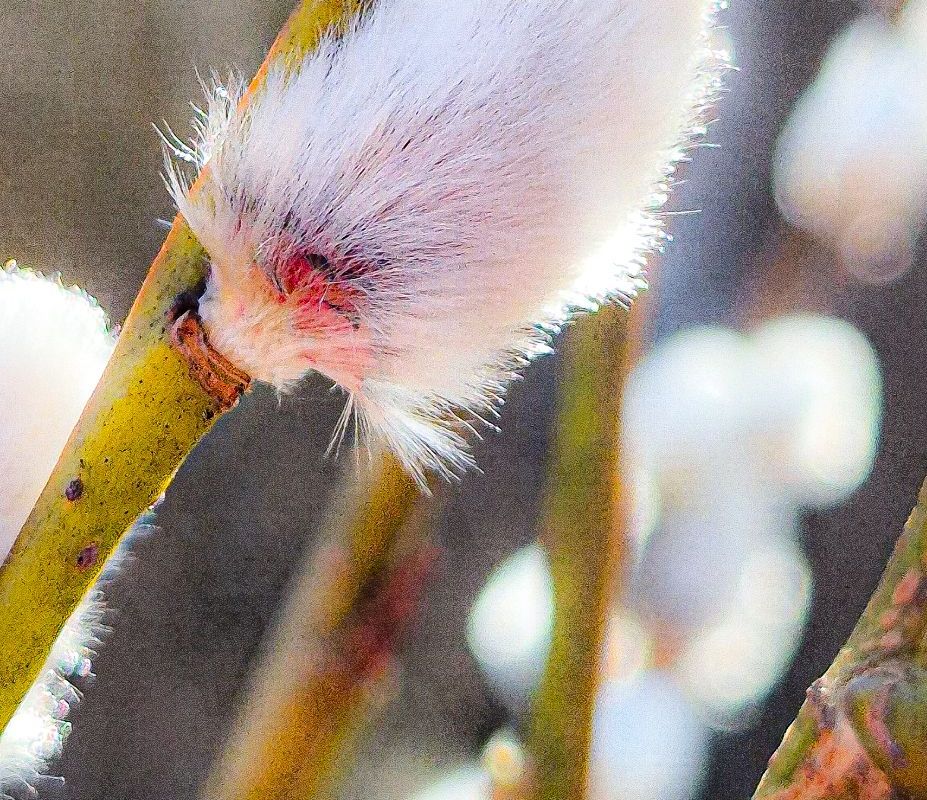
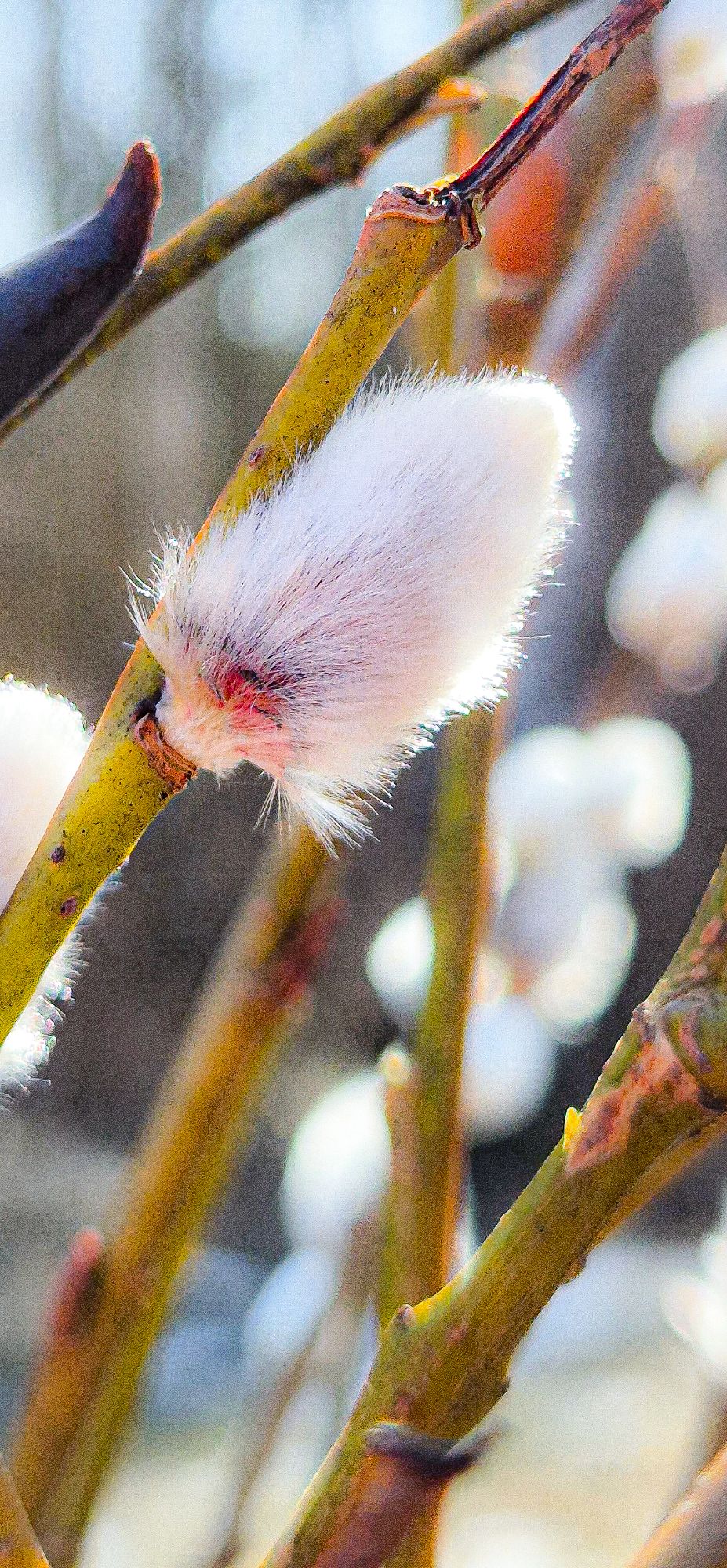
Appearance of willow catkins (pajunkissa) is a sure sign of spring – although the whole reason the catkins have “fur” is to protect the flowers from the cold.
In Finland, there is a tradition of collecting willow branches before Palm Sunday, decorating them and having kids go around the neighborhood to exchange the branches for candiy. It’s a Finnish version of “trick-or-treating”.
Or, actually, you should say that trick-or-treat is American-style virpominen. After all, the Finnish tradition has been around for hundreds of years.
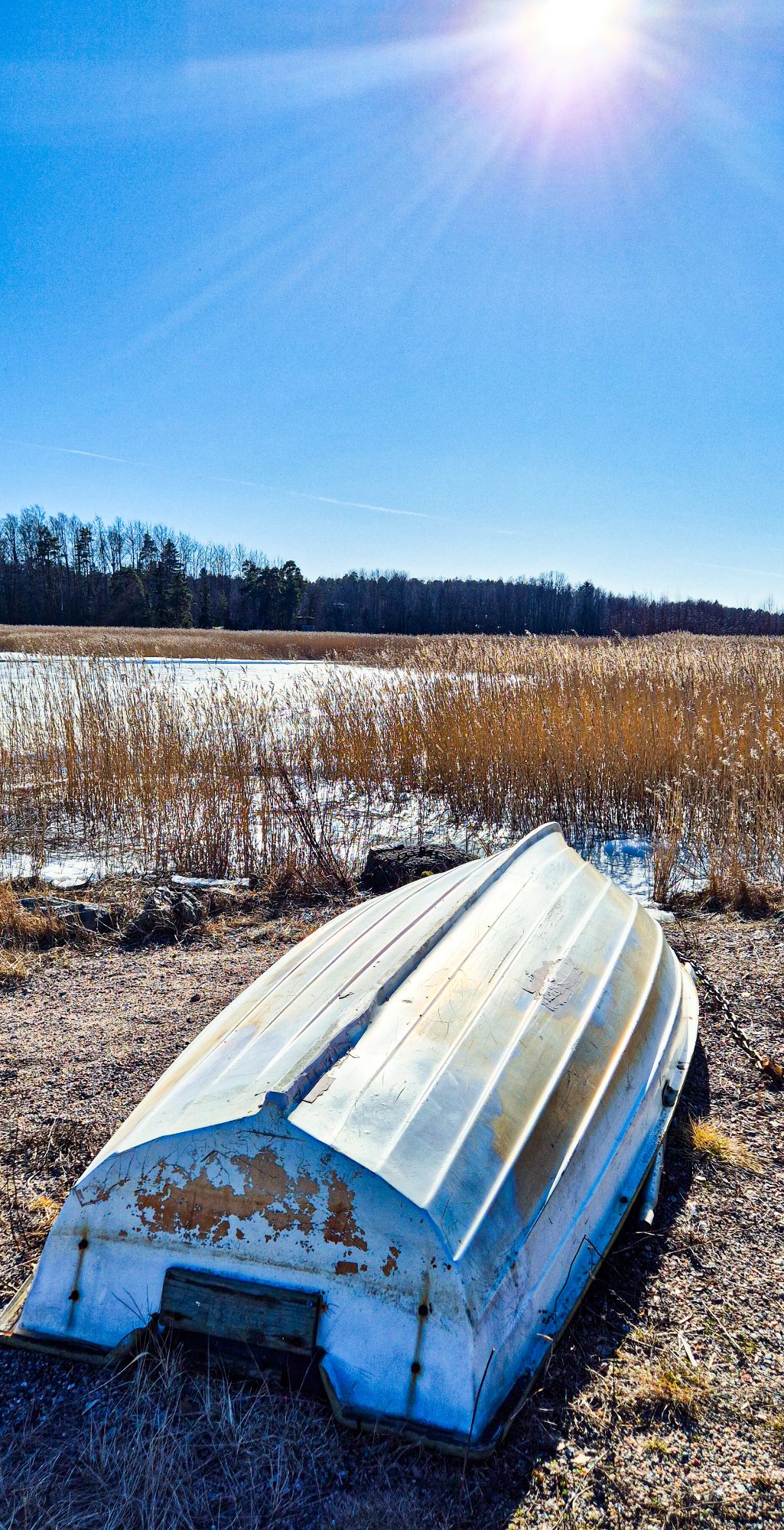
It’s been several weeks of above 0°C temperatures, and the snow is gone – except for the random piles covered in sand and pebbles that typically only melt at around midsummer (or at least it feels that way) and the sea ice. Plenty of ice left.
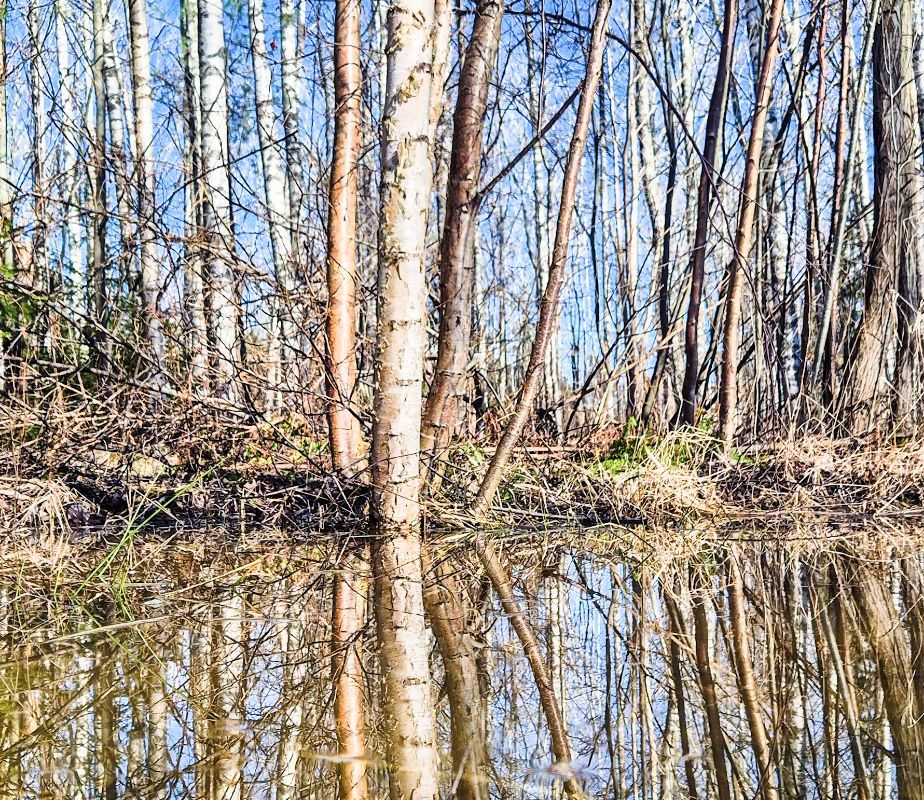
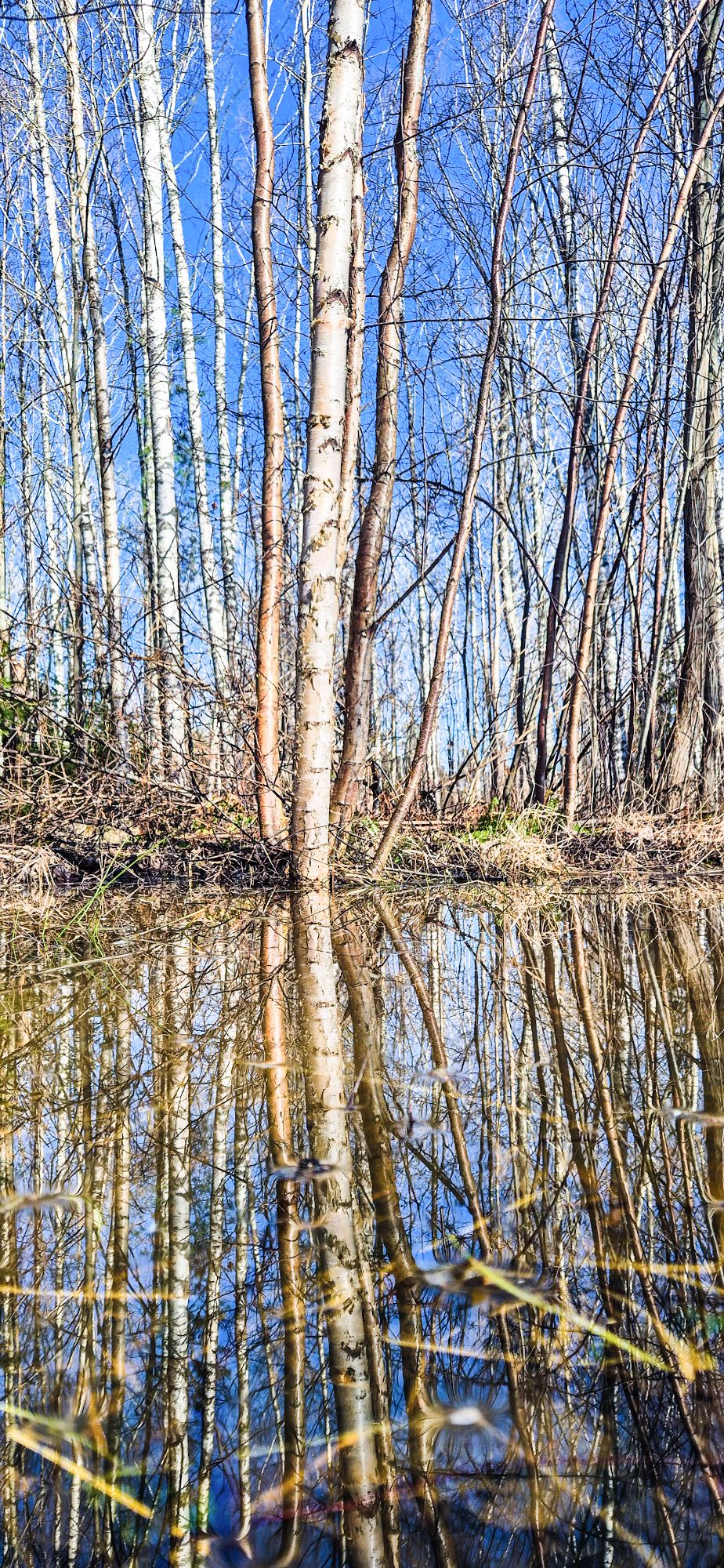
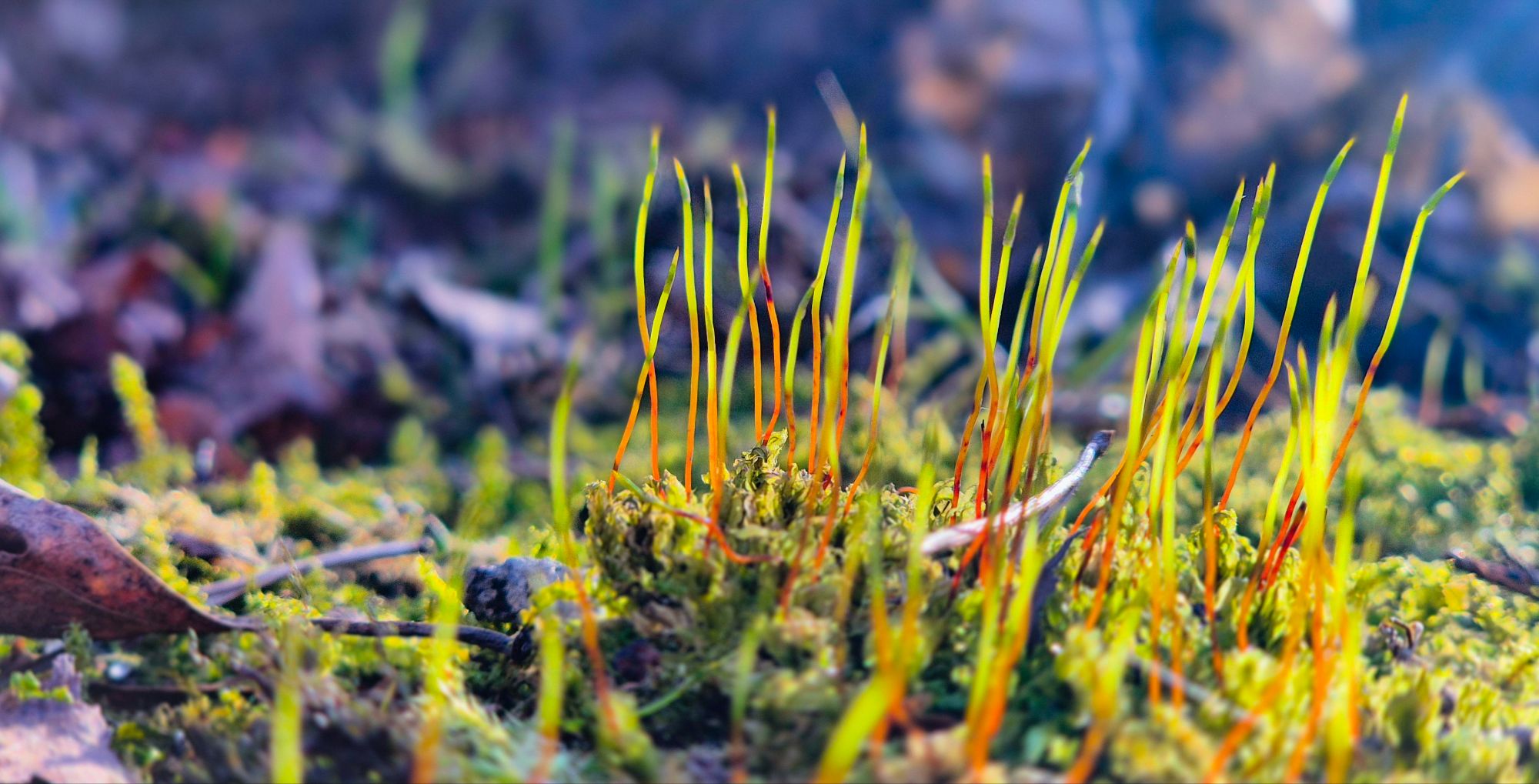
The sun was shining brightly and the neighborhood forest felt like spring. It is still early in the year and the nature seems unsure whether it can trust the warmth. There are no early flowers or green shoots in the trees yet. The first shoots of grass are rising from the forest moss.
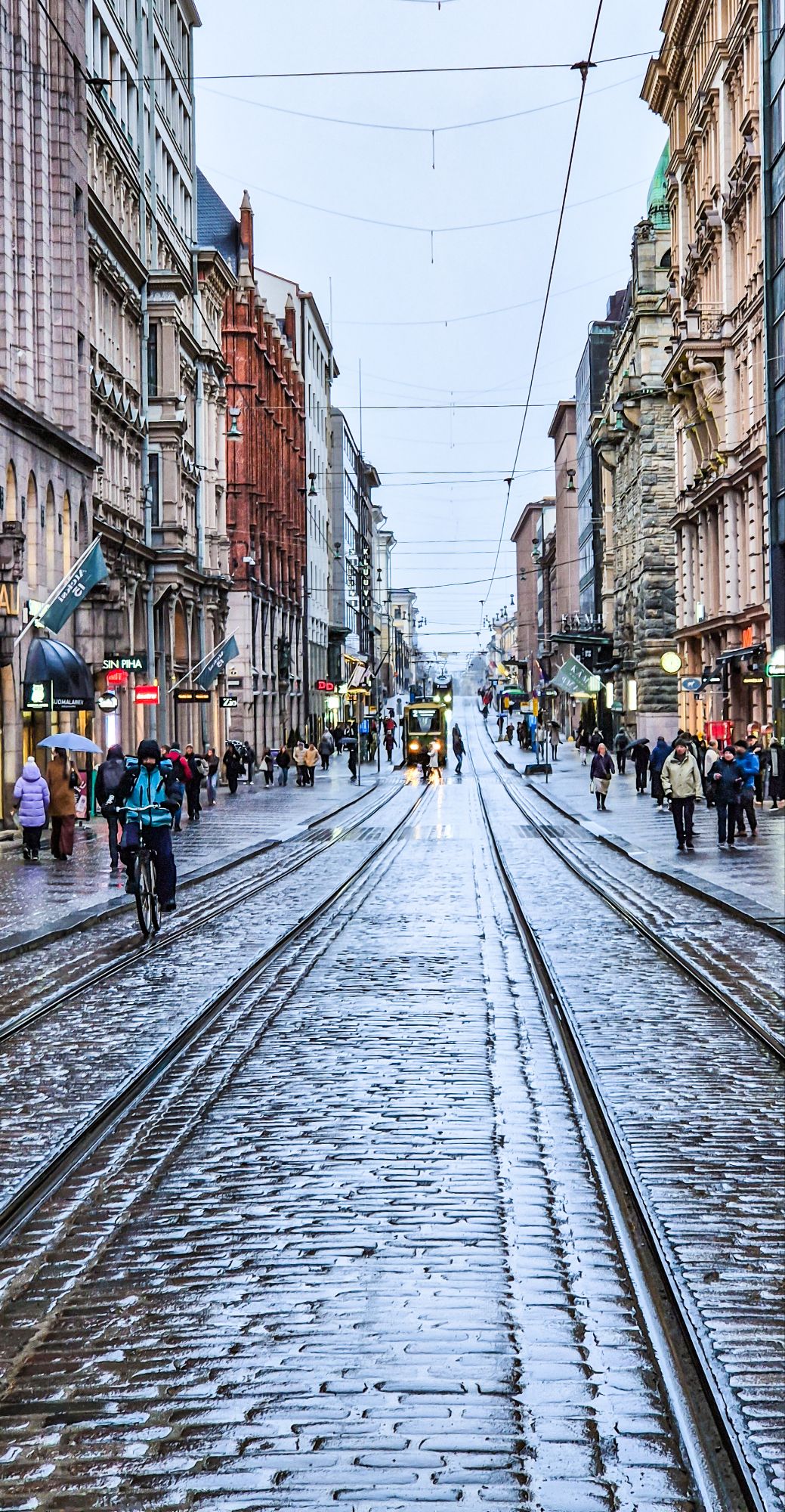
In Southern Finland, there is no weather worse than +2°C and rain. My foreign friends think I’m nuts when I say I’d take -25°C any day over +2°C.
You can enjoy the beautiful crispness of -25°C if you wear the right gear. But nothing improves +2°C and rain. It is miserable, depressing, gloomy, and, because it is Finland, most often dark.
I think my opinion has only gained credibility now that my South African-born-and-bred husband has started to agree with me.
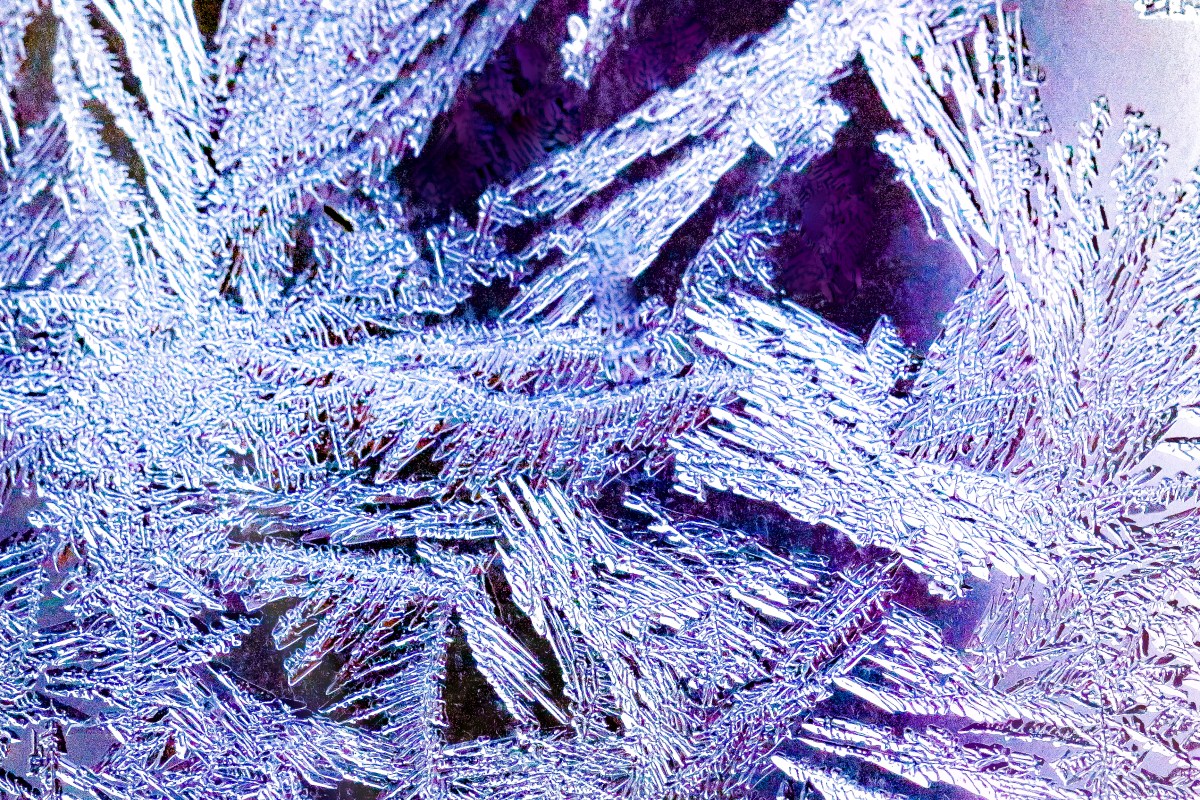
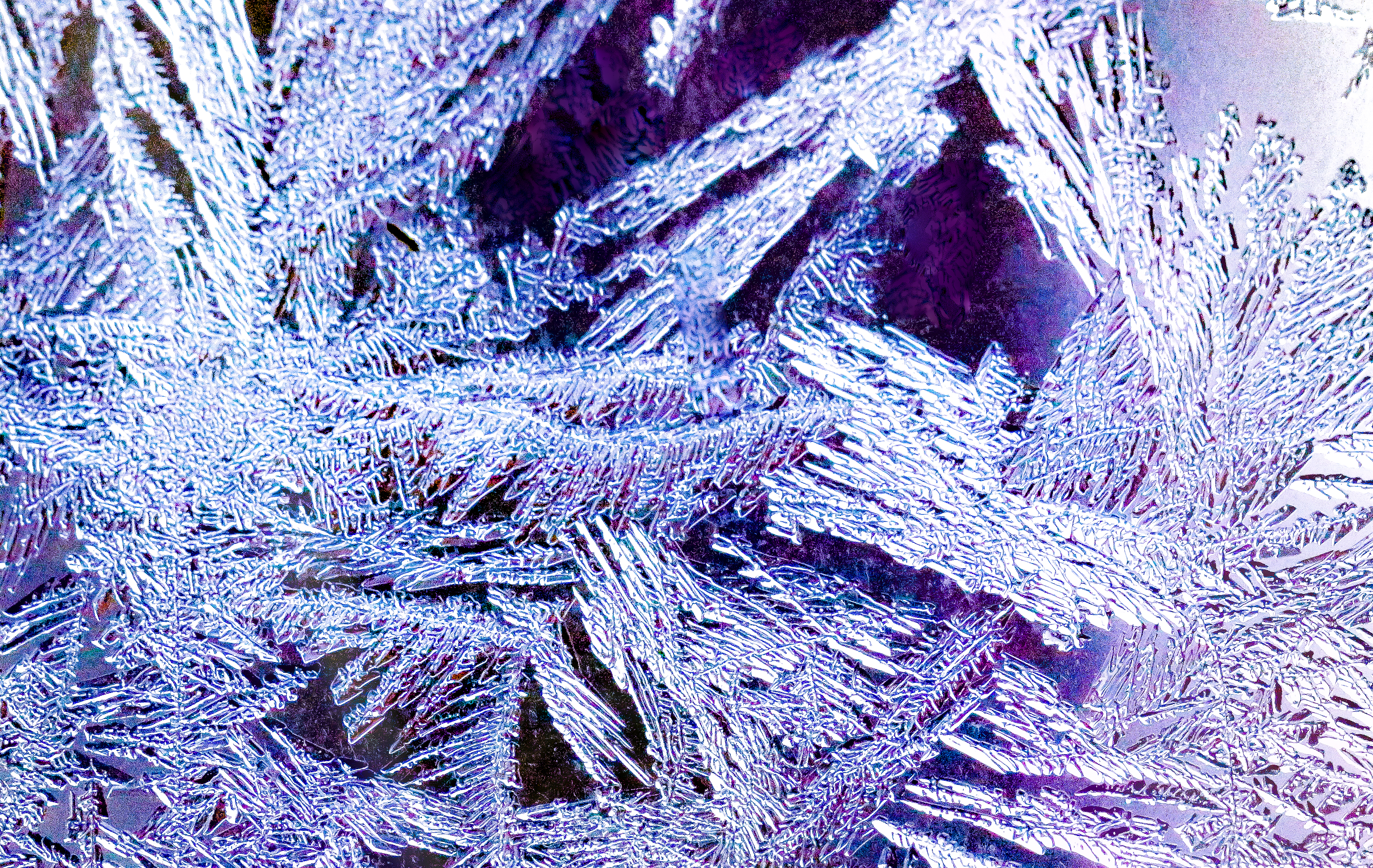
We have a big glassed-in terrace in our back garden. When the temperature stays below zero for several days in a row, the glass gets covered in ice crystals. It looks like it belongs in the ice palace from Narnia (or Frozen, for the girls’ generation). Trying to take pictures of it is impossible, though. A photo never compares.
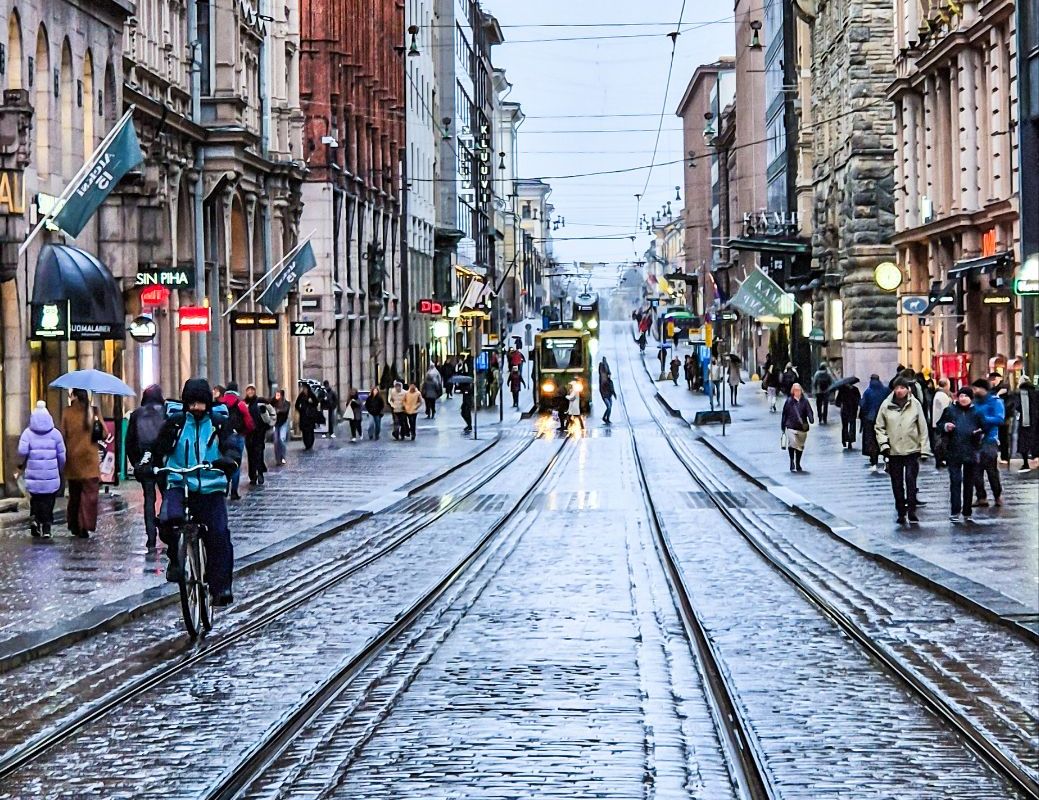
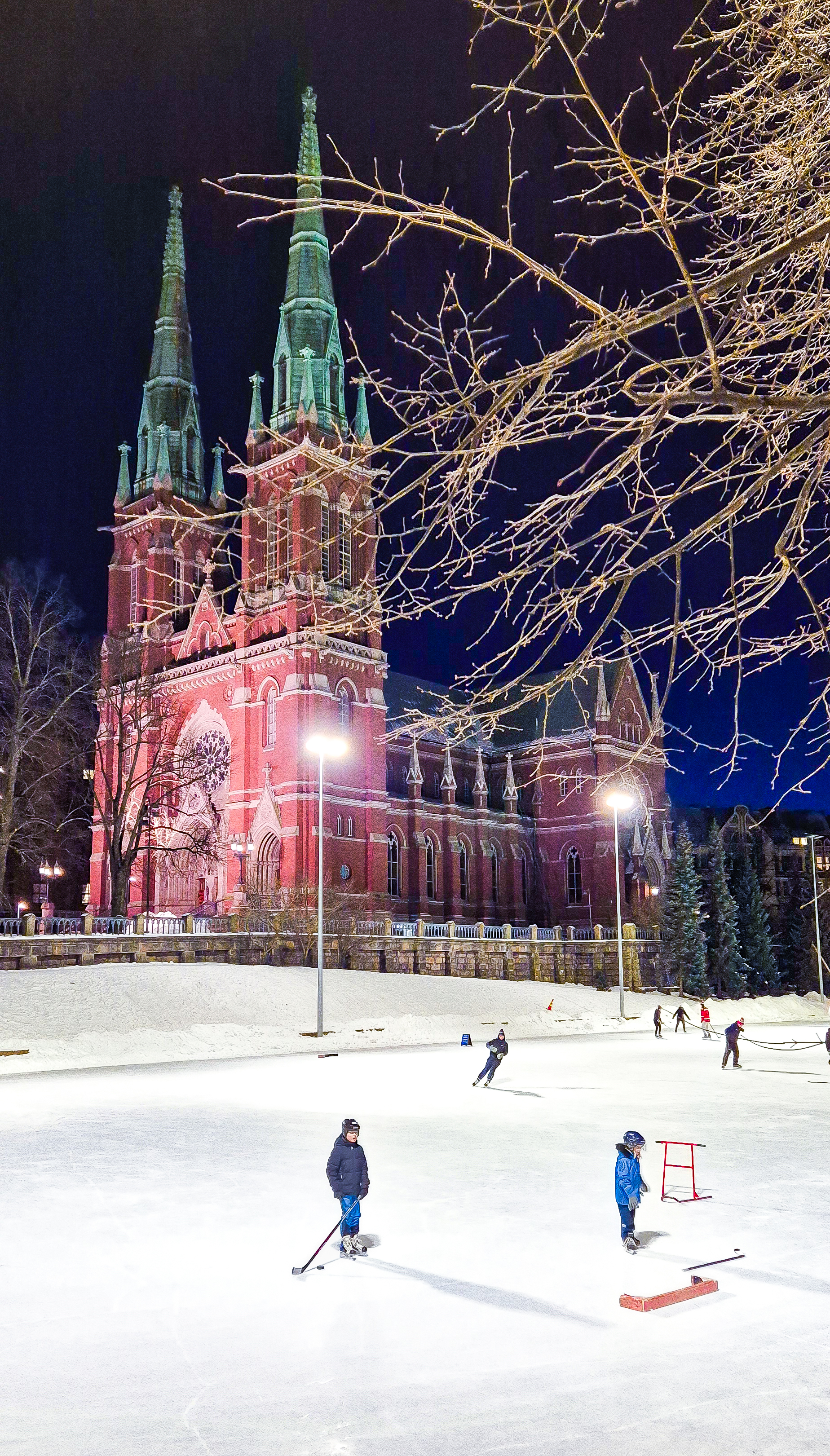
My office is in the centre of Helsinki. In winter, the streets nearby are usually quiet when I leave in the evenings. But put an ice rink there, and suddenly not even –12°C keeps kids (big or small) from appearing in hordes.
The first time Stuart visited Finland was for Christmas 2010. It was an exceptional December. Over one metre of snow blanketed Helsinki, and the city was running out of places to plough it. Parking lots and walkways disappeared under snow mountains in an attempt to keep the streets clear. The temperature dropped below –27°C the day before Christmas Eve in Asikkala, where we were spending the holidays.
Everyone kept saying how rare that winter was, but I don’t think Stuart truly understood it until we moved here. The past four winters have shown how much muddier a typical coastal winter is. Because of the sea, day temperatures rise above 0°C on more than half (sometimes two-thirds) of days in January and February. Snow melts, turns slushy and heavy, mixes with sand and dirt, and becomes cold mud. Not exactly postcard-perfect winter scenery – at least not before the next snowfall briefly covers it all again.
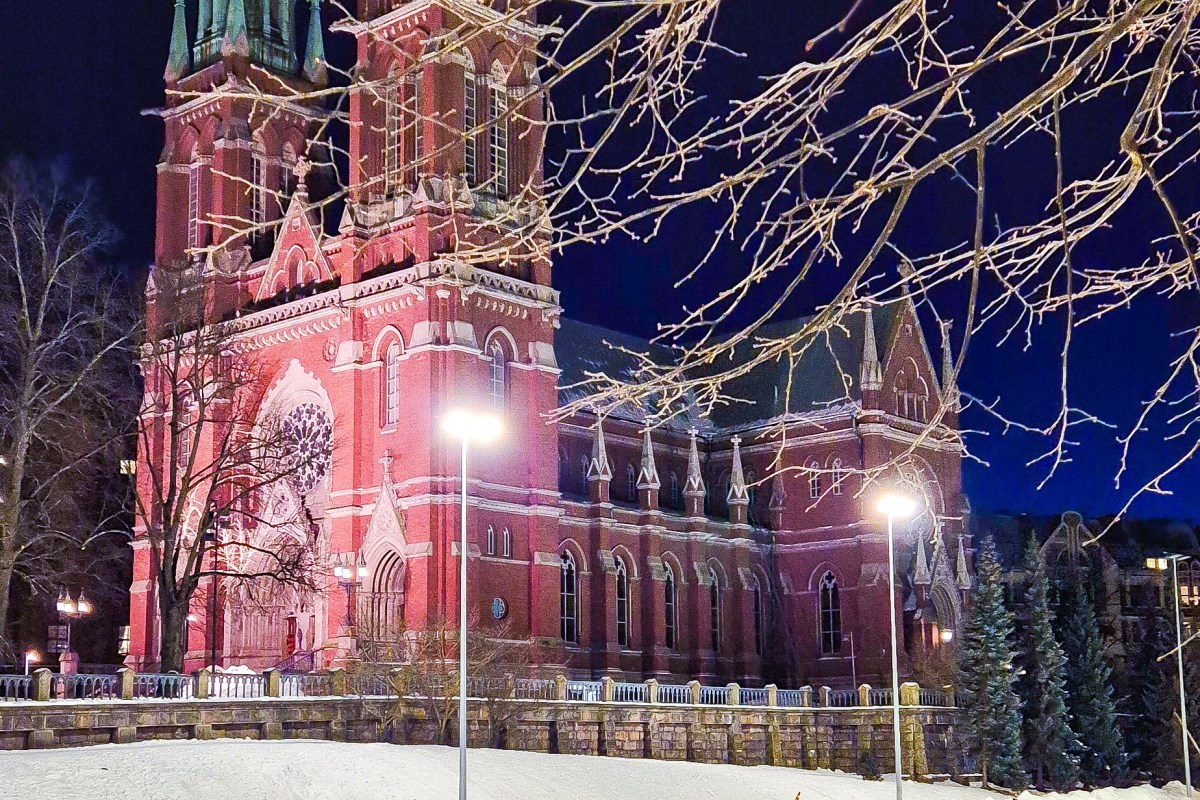
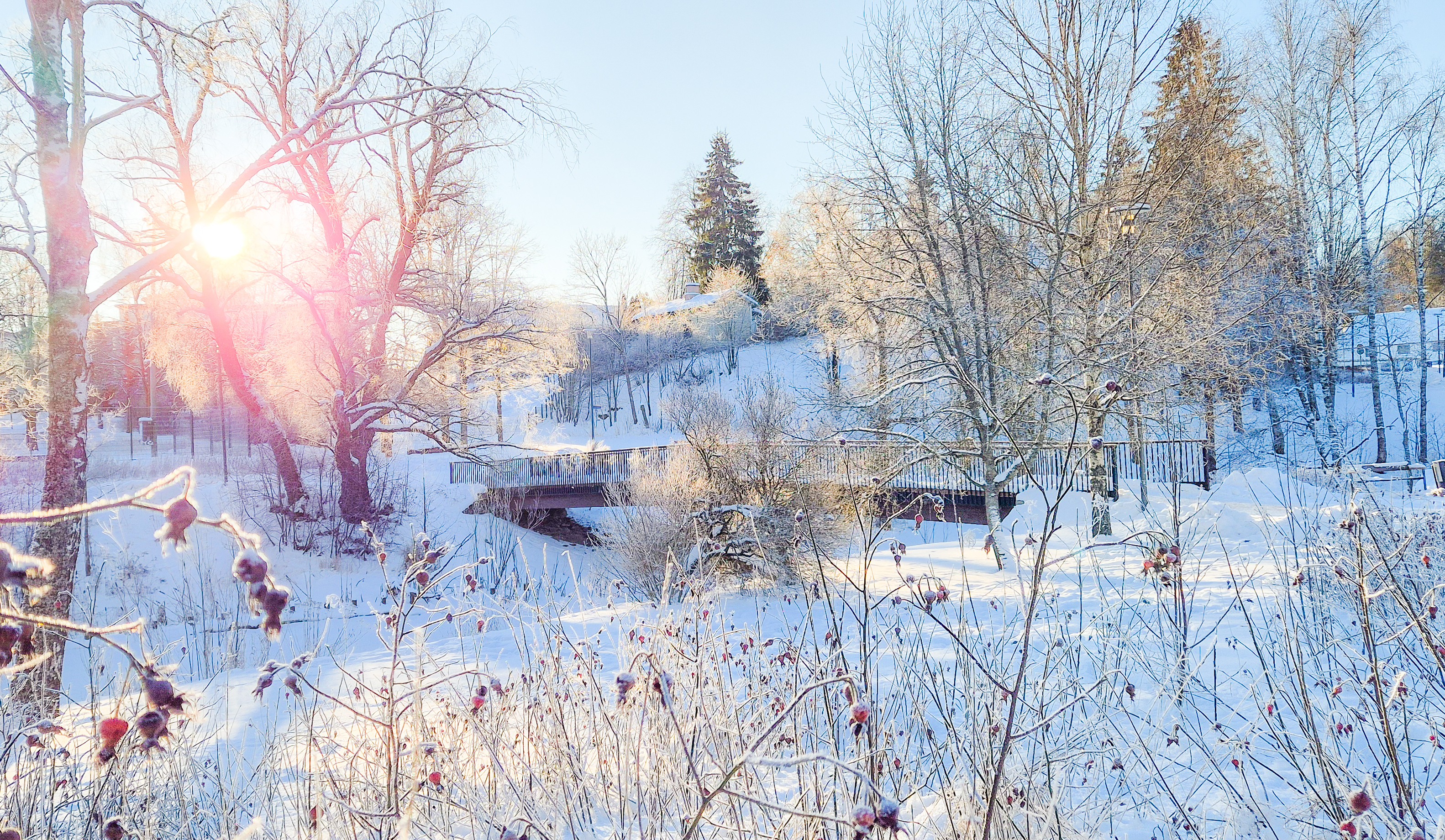
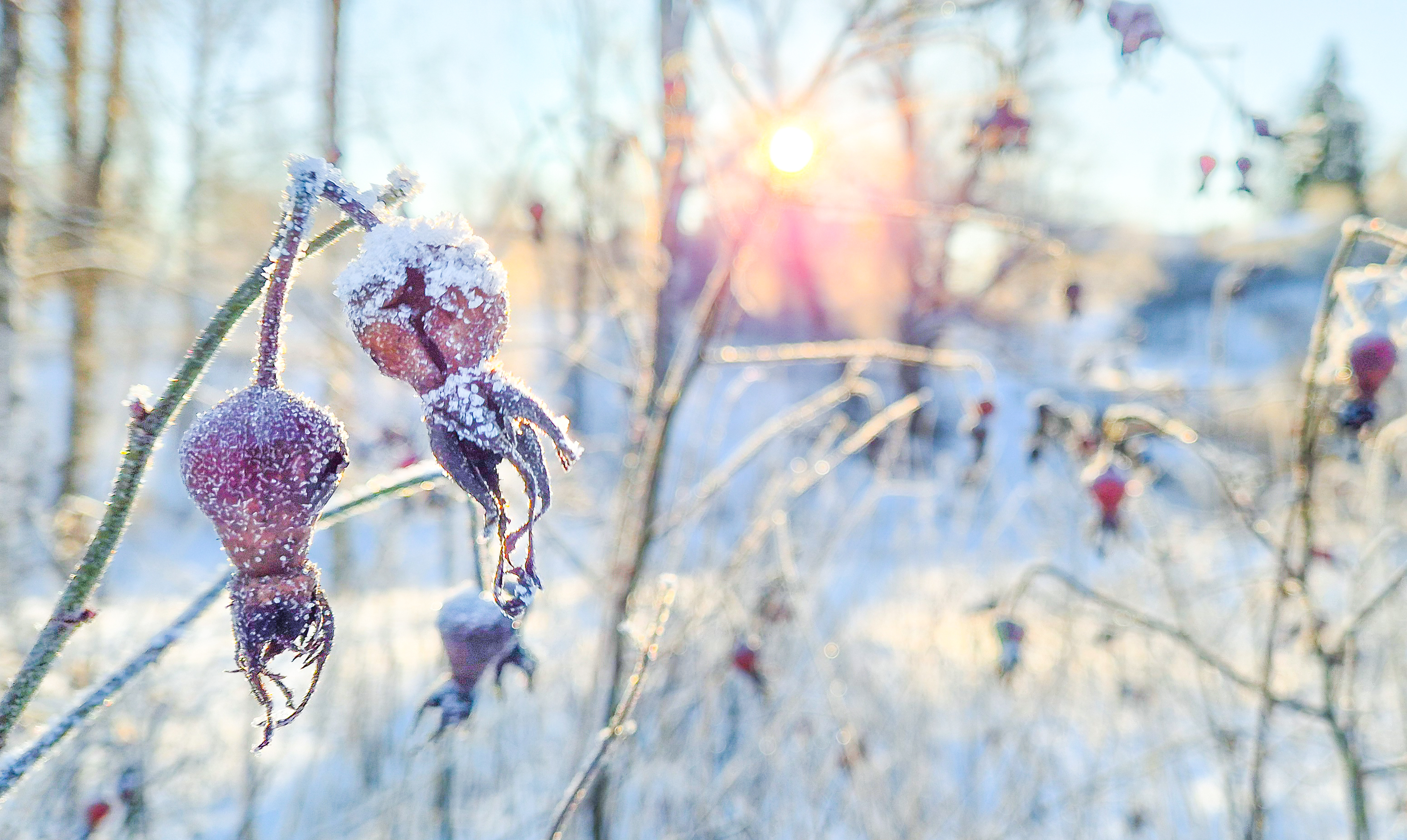
Therefore, even with numb fingers, a frozen-solid car, and limited time outdoors, I love these crisp, sunny, beautiful winter days. You can see the cold in the air and the way light reflects.
–10°C would be perfectly fine, though. –20°C is pushing it.

 Blue Moment